
- Author
-
-

- User
- Flixsendblog
- Posts by this author
- Posts by this author
-
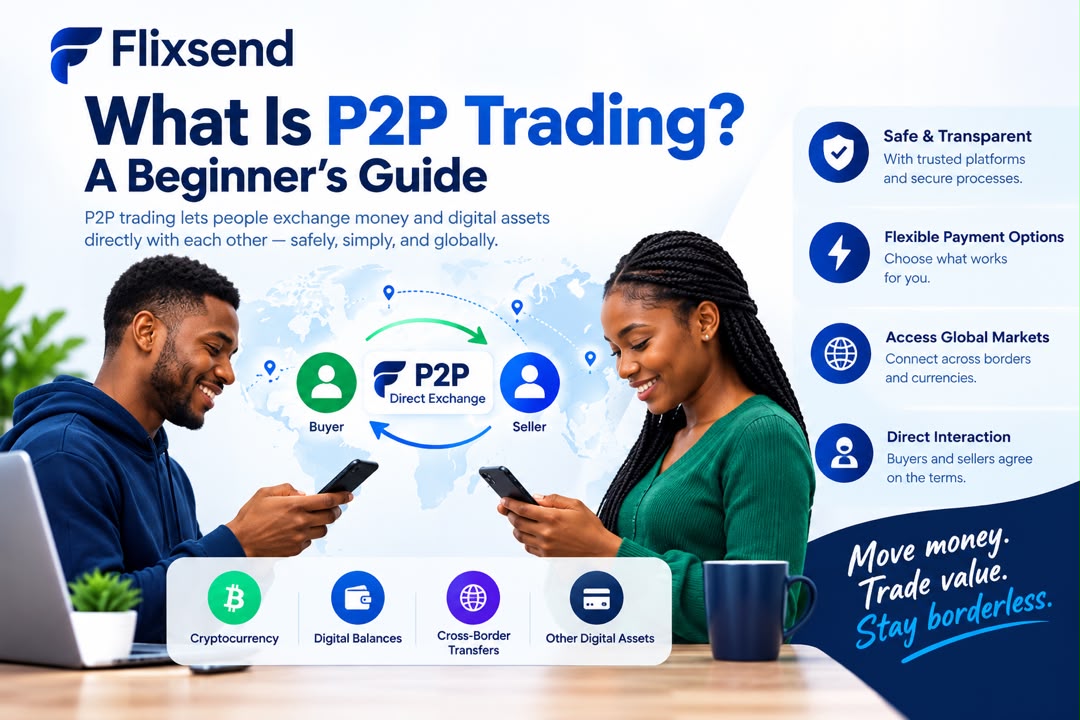
What Is P2P Trading? A Beginner’s Guide
P2P trading is becoming an increasingly popular way for people to exchange money and digital assets directly with one another. Whether you want to understand how online money transfers work, explore digital currencies, or learn about cross-border transactions, understanding peer-to-peer trading is a useful place to start.
But what exactly is P2P trading, how does it work, and what should beginners know before getting started?
In this guide, we’ll explain the basics in simple terms.
What Is P2P Trading?
P2P stands for peer-to-peer. P2P trading is a transaction in which two people exchange money, digital assets, or other agreed-upon forms of value directly with each other, usually through an online platform.
Unlike traditional transactions that may require a bank or another financial institution to handle every step, P2P trading connects buyers and sellers so they can arrange an exchange.
For example, imagine someone wants to buy a digital asset using their local currency. Another person is willing to sell that asset in exchange for the same currency. A P2P platform can help connect both parties and provide tools to coordinate the transaction.
The platform's role varies. Some platforms simply introduce buyers and sellers, while Flixsend offer features such as payment instructions, transaction tracking, dispute resolution, and escrow protection.
How Does P2P Trading Work?
Although the process differs from one platform to another, a typical P2P transaction follows a few basic steps.
1. A buyer and seller connect
A buyer identifies what they want to purchase, while a seller offers an asset or balance they are willing to exchange.
2. They agree on the terms
Both parties agree on the amount, exchange rate, payment method, and any applicable fees before proceeding.
3. The buyer makes payment
The buyer sends payment using the agreed method. Depending on the transaction, this could involve a bank transfer or another supported payment service.
4. The seller confirms receipt
The seller verifies that the payment has arrived and meets the agreed conditions. Buyers should not rely solely on screenshots or messages as proof of payment.
5. The exchange is completed
Once the payment and other requirements have been verified, the asset or balance is released to the buyer according to the platform's process.
Important: Not every P2P platform follows this exact process. If a platform offers escrow, understand how it works before trading. Never assume that a transaction is protected unless the platform clearly provides that protection.
What Can You Trade Through P2P Platforms?
P2P trading can cover different types of exchanges, depending on the platform and the laws that apply in each location.
Common examples include:
- Cryptocurrencies: Buyers and sellers exchange supported digital assets.
- Digital balances: Users exchange eligible balances through supported services and agreed payment methods.
- Cross-border value transfers: People in different locations arrange exchanges using available payment options.
- Other digital goods or assets: Some platforms support additional categories of peer-to-peer transactions.
The available assets, currencies, payment methods, and transaction rules vary by platform. Always confirm what is supported before making a transaction.
P2P Trading vs. Traditional Exchanges
One of the easiest ways to understand P2P trading is to compare it with a traditional exchange.
P2P trading connects individual buyers and sellers who agree on the terms of an exchange.
A traditional exchange typically matches orders through a central order book or trading system, with prices and execution handled according to its rules.
Neither model is automatically better for every situation. The right option depends on what you want to exchange, your location, the fees involved, available payment methods, and the protections offered.
What Are the Benefits of P2P Trading?
P2P trading offers several potential advantages when used through a trustworthy platform like Flixsend.
Flexible payment options
Some P2P platforms support multiple payment methods, allowing users to choose from the options available to them.
Direct interaction
Buyers and sellers can review offers and agree on transaction terms before proceeding.
Access to different markets
P2P platforms may connect people who use different currencies or live in different locations, subject to local restrictions and the platform's supported markets.
Greater control over transaction choices
Depending on the platform, users may be able to compare offers, payment methods, and exchange rates before selecting a suitable transaction.
These benefits depend on the platform's features and the reliability of the people involved. P2P trading does not guarantee better rates, faster payments, or lower costs in every case.
What Are the Risks of P2P Trading?
Like any financial activity, P2P trading carries risks. Beginners should understand these before sending money or transferring digital assets.
1. Payment fraud
A dishonest buyer or seller may provide misleading information, use a fraudulent payment confirmation, or attempt to reverse a payment where the payment method allows it.
How to stay safer: Verify payments directly through the relevant financial service. Never release an asset based only on a screenshot or an email notification.
2. Fake platforms and impersonation
Scammers may create websites, social media accounts, or messages that imitate legitimate services.
How to stay safer: Check the official website address, avoid unfamiliar links, and never share your password, verification codes, or private keys with another trader.
3. Chargebacks and disputed payments
Some payment methods allow disputes or reversals. A payment that appears successful may not always be final.
How to stay safer: Read the platform's payment rules and use its approved transaction process.
4. Unfavourable exchange rates and hidden fees
An attractive offer may include a poor exchange rate or additional charges.
How to stay safer: Calculate the total amount you will pay and the amount you will receive before confirming the transaction.
5. Regulatory and account restrictions
Payment providers and digital-asset platforms may impose restrictions based on location, account status, or the nature of a transaction.
How to stay safer: Use services permitted in your jurisdiction, follow the platform's terms, and understand any relevant identity-verification requirements.
How Can Beginners Start P2P Trading Safely?
If you are new to P2P trading, take time to understand the process before committing money.
Here are a few practical steps:
- Choose a reputable platform. eg: Flixsend Research its ownership, security practices, customer support, and dispute-handling process.
- Understand the fees. Check the exchange rate, transaction charges, and any payment-provider fees.
- Review the other party. Where available, check trading history, completed transactions, and feedback.
- Keep communication on the platform. Moving conversations or payments outside the approved process can make disputes harder to resolve.
- Verify every payment independently. Check your actual account balance or transaction record.
- Start with a small transaction. Learn how the platform works before increasing the amount.
- Protect your account. Use a strong, unique password and enable two-factor authentication where available.
- Follow local laws. Confirm that the transaction and the services you use are permitted where you live.
Is P2P Trading the Same as Sending Money?
No. Although the two activities can overlap, they are not identical.
A conventional money transfer sends funds from one person or account to another through a payment provider or financial institution.
P2P trading involves an exchange between parties, usually under agreed terms. For example, one person might provide a supported digital balance while another provides an agreed amount in a different currency.
The distinction matters because P2P transactions may involve exchange rates, asset-release conditions, counterparty risk, and additional verification steps that do not apply in the same way to every ordinary money transfer.
How Does P2P Trading Relate to Cross-Border Transactions?
Sending or exchanging value across borders can be complicated. People may face different currencies, payment services, fees, processing times, and account requirements.
P2P platforms can help connect people who want to exchange value across locations. However, the experience depends on which countries, currencies, assets, and payment methods the platform supports.
Before starting a cross-border transaction, confirm the total cost, expected processing time, recipient details, and any applicable legal or payment restrictions.
The important thing is not simply moving money from one place to another. It is understanding how the transaction works and making an informed decision.
Where Does Flixsend Fit In?
At Flixsend, we believe exchanging value across borders should be easier to understand and more convenient to navigate.
Our focus is on building a P2P experience that helps people connect around digital balances and cross-border exchanges through supported options. The broader goal is to make the process clearer, with an emphasis on usability, transparency, and helping users understand their transactions.
As with any P2P service, users should review the available payment methods, transaction terms, fees, and applicable restrictions before trading.
Move money. Trade value. Stay borderless.
Final Thoughts
P2P trading is a way for people to exchange value directly with one another, often with the help of an online platform. It can offer flexibility and access to different markets, but it also requires careful attention to payment verification, fees, security, and the reliability of the other party.
For beginners, the best approach is to learn the process, understand the risks, choose a reputable service, and start carefully.
As digital transactions continue to evolve, understanding P2P trading can help you make more informed decisions about how you exchange value online.
Ready to learn more about Flixsend? Visit flixsend.com to explore the platform and learn more about its P2P direction.
This article is for educational purposes only and does not constitute financial, investment, or legal advice. Features and availability vary by platform and location.